The Growth of Smart Assistants
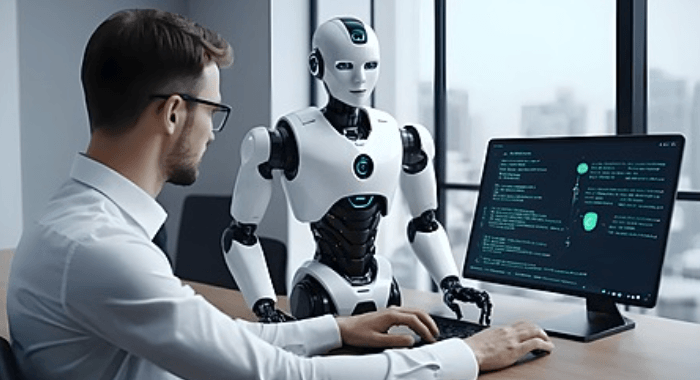
The growth of smart assistants stems from advances in voice recognition, constant connectivity, and demand for ambient, hands-free help. They blend local processing with cloud insights to learn from interactions while safeguarding privacy. Deployments span homes and enterprises, enabling gradual automation from routines to workflows. The trajectory points to deeper personalization and interoperability, tempered by governance and robust safeguards. As systems become more capable and trusted, questions about control, data use, and transparency surface, inviting further scrutiny.
What Sparked the Rise of Smart Assistants
The rise of smart assistants traces to a convergence of advancing voice-recognition technology, ubiquitous connectivity, and consumer demand for hands-free, context-aware help.
These factors unlocked rapid adoption across homes and devices, enabling ambient convenience.
Privacy concerns emerged as a check on deployment, while user autonomy growth shaped expectations for control, transparency, and customizable privacy settings in daily interactions with intelligent assistants.
How Smart Assistants Learn and Adapt to You
Smart assistants learn and adapt by translating user interactions into actionable models, then refining those models through continuous feedback and contextual data. They leverage adaptive feedback to tune responses, prioritize tasks, and anticipate needs, balancing local processing with cloud insights.
Privacy implications arise as data streams accumulate; designers pursue transparency, control, and rigorous security to sustain user trust while maintaining personalization and efficiency.
Real-World Impact: From Homes to Enterprises
Real-world deployment of smart assistants spans domestic environments and enterprise ecosystems, revealing how incremental automation scales from individual routines to organizational workflows.
Across homes and offices, deployments optimize operations, monitor assets, and support decision-making in real time.
Yet privacy tradeoffs emerge alongside efficiency gains; user consent remains pivotal to governance, security, and trust, shaping scalable adoption in diverse contexts.
The Road Ahead: Trends and Opportunities in Smart Assistants
While the pace of disruption accelerates, the road ahead for smart assistants centers on deeper personalization, interoperability, and governance that scales across devices, platforms, and industries.
The trajectory emphasizes privacy safeguards and robust multimodal interfaces, enabling seamless, user-controlled experiences.
Enterprises pursue interoperable ecosystems, standardized data exchange, and transparent AI rituals, balancing autonomy with accountability to unlock scalable productivity across sectors and user freedoms.
Frequently Asked Questions
How Do Privacy Controls Protect User Data in Smart Assistants?
Privacy controls protect data by enforcing access limits, encryption, and user consent, while data minimization reduces stored information; multilingual deployment and cross cultural handling ensure respectful, localized privacy choices across diverse users.
Can Smart Assistants Operate Offline Without Internet Access?
Offline functionality is limited; most smart assistants require internet access for core features, with on device processing handling simple tasks. They may operate offline for basic commands, but full capabilities depend on cloud connectivity and device hardware.
What Are the Costs of Deploying Smart Assistants at Scale?
Deployment costs scale with hardware, cloud infra, and ongoing maintenance, while privacy tradeoffs hinge on data handling and governance; organizations weigh upfront investments against long-term benefits, security measures, and user trust in an increasingly autonomous, freedom-minded tech landscape.
How Do Assistants Handle Multilingual and Cross-Cultural Contexts?
A chorus of translators guides the system, like a compass spinning toward accuracy. It handles multilingual etiquette and cultural nuance handling by adaptive models, contextualized prompts, and continuous feedback, balancing performance and user autonomy in diverse environments.
See also: How Cryptocurrency Could Affect the Future of Work
Are Smart Assistants Replacing Human Workers in Customer Support?
Smart assistants are not replacing human workers; they augment support workflows. Exploring automation and efficiency gains, they shift roles rather than erase them, though some job displacement occurs as tasks move to automated channels and self-service options.
Conclusion
The rise of smart assistants, ostensibly to simplify life, proves delightfully ironic: we outsource memory to machines that chronicle every keystroke and cough of context. They learn to anticipate needs, yet demand endless updates, privacy metrics, and governance. As homes get smarter, workers get dashboards. The future promises deeper personalization and seamless workflows, provided we tolerate data reverberations and opaque policies. In short, convenience requires consent—and a tolerance for the irony of omniscient assistants with modest transparency.